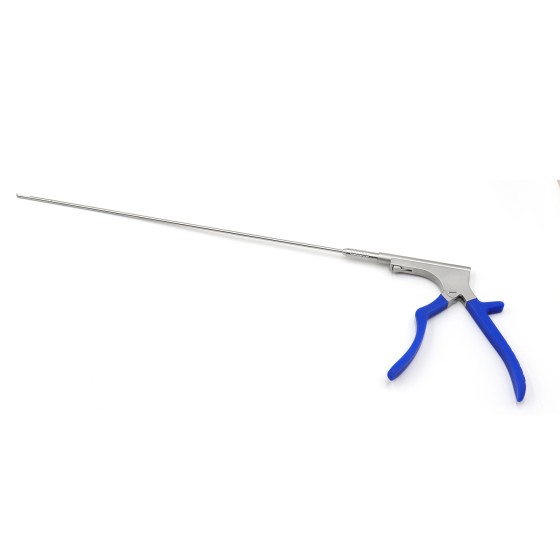
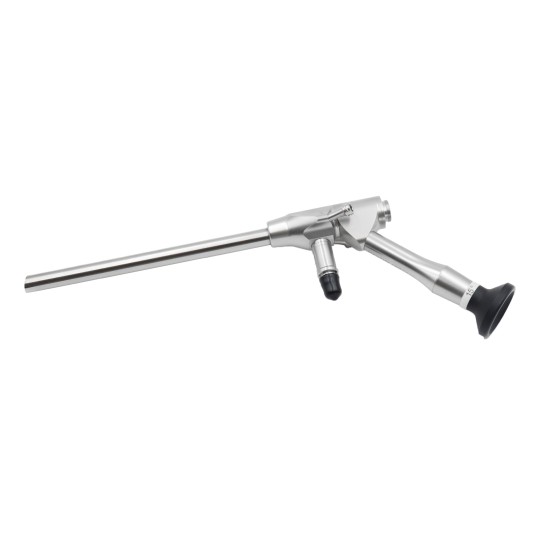
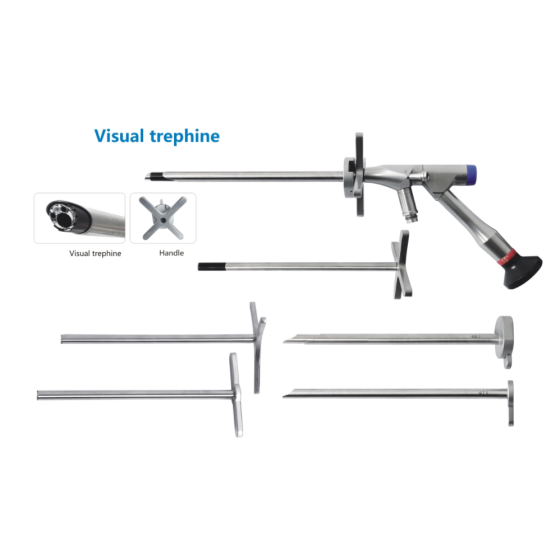
"Disposable Bipolar Plasma RF Electrode for Orthopedics" refers to "disposable bipolar plasma RF electrode for orthopedics". The following is an introduction from aspects such as its working principle, structural composition, advantages, and clinical applications:
- Working principle
- Radio frequency electric field excites plasmaEnergy is generated through bipolar radio frequency to form a radio frequency electric field at the front end of the electrode head, which excites ions in the electrolyte (such as physiological saline or tissue fluid), causing them to form a highly concentrated plasma zone7。
- Particle action decomposes tissuesThe charged particles in the plasma accelerate in the electric field to obtain high energy. When used in tissue cells, they break the molecular peptide bonds, causing the tissue to split into gas, thereby achieving the cutting and ablation of the tissue7。
- The bipolar design reduces damageIt adopts a bipolar multi-working electrode design. The current only forms a loop at the front end of the electrode head, creating a local reflux. It does not cause penetrating damage to the tissue due to current and heat. The local temperature of the knife head is usually between 40°C and 70°C, and the depth of thermal damage to the tissue is only 100nm-150nm79。
- Structural composition3
- Bipolar plasma cutter headIt is the core component of surgical operations, directly contacting the tissue and generating plasma through high-frequency current to achieve tissue cutting, ablation and other treatments.
- Surgical electrode rodIt connects the knife head and the handle, serving to conduct current and support the knife head, ensuring that the knife head can accurately reach the surgical site.
- Plastic handleIt is convenient for doctors to hold and operate. Usually, it is designed in accordance with ergonomics, allowing doctors to operate stably during the operation. Some handles may also have anti-slip functions.
- CableIt is used to connect the electrode to the RF generator and transfer RF energy to the electrode head. Some simple knife heads may not have cables.
- Suction hoseSome electrodes may be equipped with suction hoses, which can promptly remove tissue debris, blood and gas generated during the operation, maintaining a clear surgical field of view.
- Advantages
- Low-temperature operationIt can perform tissue resection and ablation at relatively low temperatures, such as when the cutting temperature is below 70°C and when the ablation temperature is below 50°C. This reduces thermal damage to the surrounding tissues, lowers adverse reactions like postoperative tissue fluid exudation and joint swelling, and is conducive to tissue repair1。
- Good hemostatic effectIt has a coagulation function, which can cause fibrinogen to aggregate to achieve hemostasis. For smaller blood vessels, it can stop bleeding simultaneously during resection, and for larger blood vessels, it also has a specific hemostasis function, making the surgical field clear and reducing intraoperative bleeding1。
- Minimally invasive and preciseThe electrode head is exquisitely designed, capable of precisely acting on the diseased tissue, reducing damage to adjacent normal tissues, blood vessels and nerves. Postoperative pain is mild, and joint function recovers better and faster1。
- Convenient operationSome joint probes are equipped with suction tubes, which can perform suction while removing tissues. There are also variable-angle joint probes that can perform excision and hemostasis operations within the narrow joint cavity and reduce the operation time1。
- Reduce complicationsDue to the minimal damage to tissues and quick postoperative recovery, it can reduce the risk of complications such as infection and adhesion, and shorten the hospital stay and rehabilitation period of patients.
- Clinical application1
- Arthroscopic surgeryIt is widely used in surgeries of knee joints, shoulder joints, hip joints, wrist joints, ankle joints and elbow joints, etc. It can perform operations such as meniscus excision, trimming and repair, ligament release or tension reduction, synovial membrane excision, and removal of free bodies within the joint.
- Spinal surgeryIf it is used for the treatment of intervertebral disc protrusion under spinal endoscopy, the protruding intervertebral disc tissue can be ablated and removed through plasma radiofrequency electrodes to reduce the compression on the nerves. It can also be used for soft tissue hemostasis, ablation and other operations in spinal surgery.