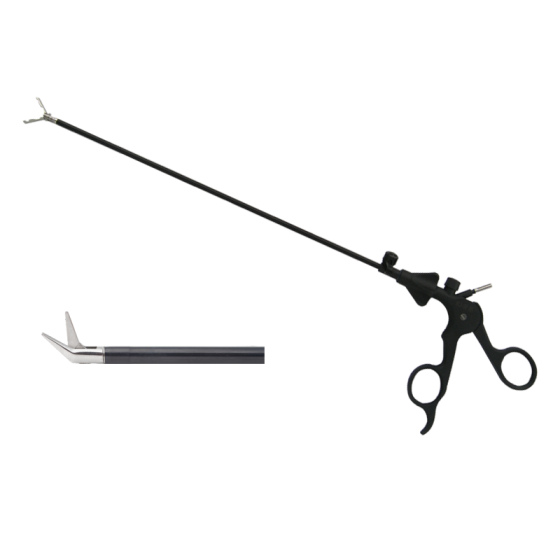
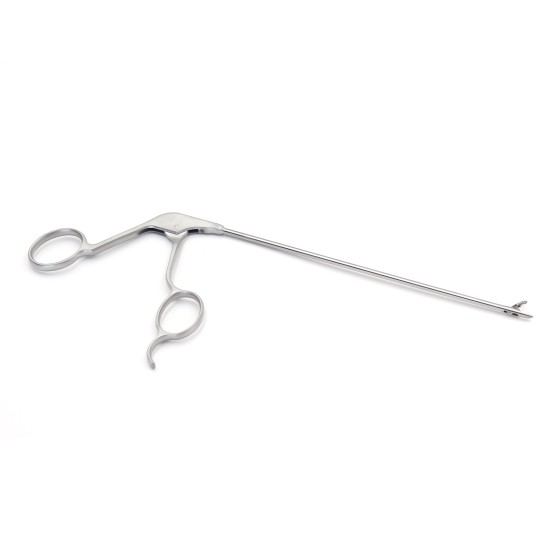
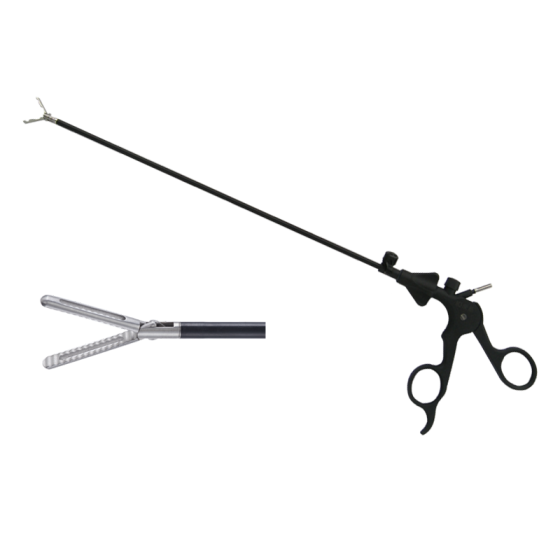
I. Sphenoid Sinus biting forceps (Curved Type)
Core specifications
| Parameter |
Specification |
| Clamp type |
Bending Angle: 70°/30° |
| Diameter |
2.2mm / 3.2mm (Fine diameter design) |
| Working length |
190mm / 230mm |
| Opening direction |
- (The bending pliers do not need to have upper and lower openings. |
The role in nasal surgery:
- Precisely enter the deep surgical field
- The bending Angle (70° or 30°) is designed specifically for matchingAnatomical structure of the sphenoid sinusLocated at the deepest part of the nasal cavity, it can bypass the curved path of the nasal passage and directly reach the natural opening area of the sphenoid sinus.
- Fine bone removal
- ForBite off the anterior wall bone of the sphenoid sinusExpand the sinus orifice (such as sphenoid sinus opening surgery), or trim the bony ridge at the junction of the posterior ethmoid sinus group and the sphenoid sinus (for reference)Anatomy of nasal endoscopic surgery(Requirements)
- The fine-diameter forceps head (2.2-3.2mm) is suitable for the narrow space of the sphenoid sinus area and avoids damaging the lateral wallOptic canal and internal carotid artery.
- Security control
The 190mm short handle is suitable for children or narrow nasal cavities, while the 230mm long handle provides adults with lever force for operation. The smooth surface design reduces tissue scratches.
Literature basis"Nasal Endoscopic Surgery" emphasizes that the curved bone bite forceps are key instruments to avoid "blind operation" in the sphenoid sinus area. Their Angle design can replace bone chisels and reduce the risk of mucosal tears.
Ii. Nasal lamina biting Pliers (Straight type)
Core specifications
| Parameter |
Specification |
| Clamp type |
Straight type(No bending |
| Diameter |
2.2mm / 3.2mm / 4.0mm (progressive diameter) |
| Working length |
190mm / 230mm |
| Opening direction |
Top opening/bottom opening |
The role in nasal surgery:
- Bony structure repair
- Top-opening typeUsed for biting offHigh deviated nasal septum cartilage(Such as the vertical plate of the ethmoid bone) orBony hyperplasia of the middle turbinateVertical downward force is more in line with the principles of mechanics.
- Bottom-opening typeApplicable toThe bone of the inferior meatus and the base of the noseTrimming (such as the nasal conchae volume reduction surgery), horizontal occlusion should be avoided to block the surgical field.
- Multi-scenario adaptation
- A fine diameter of 2.2-3.2mm is used to handle fine structures (such as unhook process bone), while a thick diameter of 4.0mm is used to quickly bite off the thickened bone wall of the frontal recess or maxillary sinus ostium.
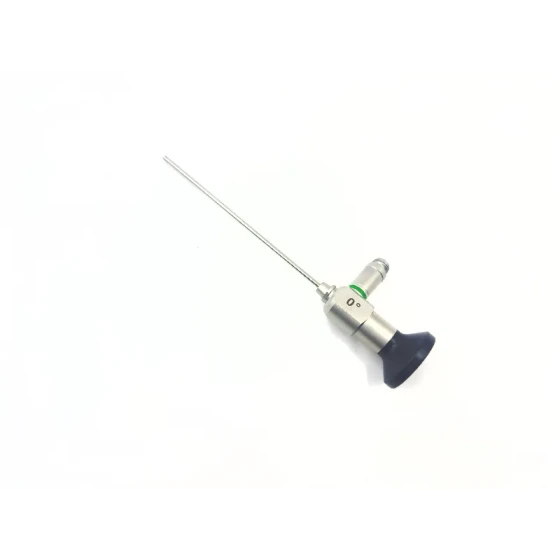
- The straight handle design provides a linear biting force, and in combination with a 0° endoscope, it achieves "precise bone window formation under direct vision".
Surgical exampleDuring the correction of deviated nasal septum, the upper opening laminectomy can safely bite off the lower edge of the deviated tetragonal cartilage, avoiding mucosal perforationRhinologyTechnical guide.
Iii. Instrument Comparison and Surgical Procedure Positioning
| Feature |
Sphenoidal bone biting forceps |
鼻椎板咬骨钳 |
| 核心用途 |
深部蝶窦区骨质操作 |
前中鼻道骨性结构修整 |
| 角度优势 |
规避视神经/血管死角 |
直线快速咬合力传导 |
| 风险控制 |
细径防滑脱 |
上下开口定向保护粘膜 |
总结:
这两种咬骨钳共同构成鼻科骨性操作的核心器械:蝶窦咬骨钳以角度弯曲设计攻克深部狭窄区域(尤其蝶窦、后组筛窦),而直型椎板钳通过开口方向分化实现全鼻道骨质精准塑形。其直径分级(2.2-4.0mm)和工作长度(190-230mm)覆盖了从儿童到成人、从微创到开放的全序列鼻窦手术需求,是功能性内镜鼻窦手术(FESS)安全性的重要保障。
参考文献基准:
规格设计符合《耳鼻咽喉头颈外科学》第9版对鼻窦器械的标准化要求,工作长度匹配内镜器械通道标准